

The Christmas Tree: A Timeless Tradition and Its Fascinating History
As the holiday season approaches, few symbols evoke the spirit of Christmas quite like the evergreen tree, adorned with twinkling lights, colorful ornaments, and perhaps a star crowning its peak. For many, setting up the Christmas tree is a cherished ritual that signals the start of festivities, family gatherings, and gift-giving. But have you ever wondered where this tradition comes from? The history of the Christmas tree is a rich tapestry woven from ancient pagan rituals, Christian symbolism, and cultural exchanges across centuries and continents. In this essay, we'll delve into its origins, evolution, and enduring appeal, uncovering how a simple evergreen became a global icon of joy and celebration.

Ancient Roots: Evergreens as Symbols of Life
The use of evergreen trees and branches during winter celebrations predates Christianity by millennia. In ancient civilizations, evergreens symbolized eternal life and renewal amid the harshness of winter. The Egyptians, for instance, decorated their homes with green palm rushes during the winter solstice to honor Ra, the sun god, celebrating the return of life as the days grew longer. Similarly, the Romans adorned their temples and homes with evergreen boughs during Saturnalia, a festival honoring Saturn, the god of agriculture, which involved feasting, gift-giving, and a temporary reversal of social norms—elements that echo in modern Christmas customs.
Further north, the ancient Celts and Scandinavians revered evergreens as well. Druids decorated oak trees with apples and candles to ward off evil spirits and ensure a bountiful harvest. These practices highlight a universal human impulse to combat the darkness of winter with symbols of vitality and hope. While not directly tied to Christmas, these traditions laid the groundwork for incorporating evergreens into Christian observances.
Medieval Beginnings: From Paradise Plays to Decorated Trees
The Christmas tree as we know it began to take shape in medieval Europe, particularly in Germany. During the Middle Ages, churches performed "Paradise Plays" on December 24, dramatizing the story of Adam and Eve from the Book of Genesis. A fir tree, representing the Tree of Life in the Garden of Eden, was central to these performances, often hung with apples (symbolizing the forbidden fruit) and wafers (representing the Eucharist). Over time, people began bringing these "Paradise Trees" into their homes, decorating them with edible treats like cookies and fruits.
By the 16th century, this custom evolved into a distinct tradition in Protestant regions of Germany. Legend credits Martin Luther, the Protestant reformer, with adding the first lights to a Christmas tree. One winter evening, while walking through a forest, Luther was inspired by the stars twinkling through the evergreens. He reportedly brought a tree indoors and wired candles to its branches to recreate the scene for his family, symbolizing the light of Christ illuminating the world. Though this story may be apocryphal, it underscores the blend of pagan evergreens with Christian theology that defined the early Christmas tree.
The Spread Across Europe: Royalty and Romance
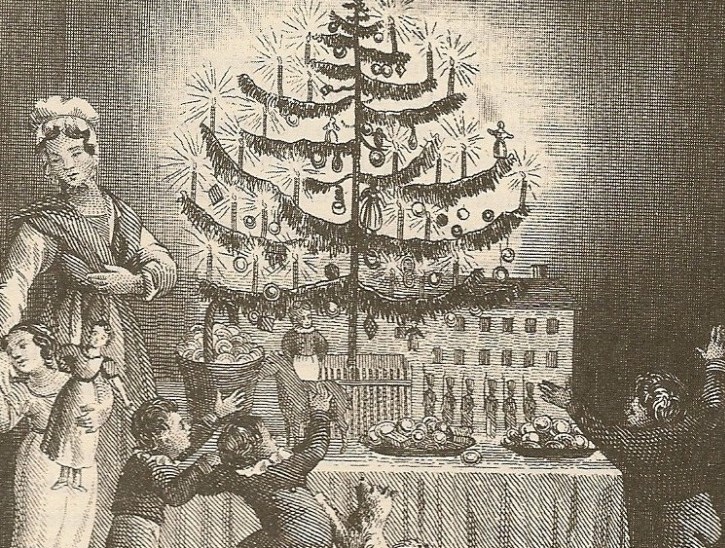
The Christmas tree remained largely a German custom until the 19th century, when it gained royal endorsement and spread throughout Europe. In England, the tradition was popularized by Queen Victoria and her German-born husband, Prince Albert. In 1846, an illustration in the Illustrated London News depicted the royal family gathered around a decorated Christmas tree at Windsor Castle, complete with candles, sweets, and toys. This image captivated the British public, who eagerly adopted the practice as a fashionable Victorian custom. However, it's worth noting that German immigrants and even earlier royals, like Queen Charlotte (wife of George III), had introduced smaller trees to England as early as the late 18th century.
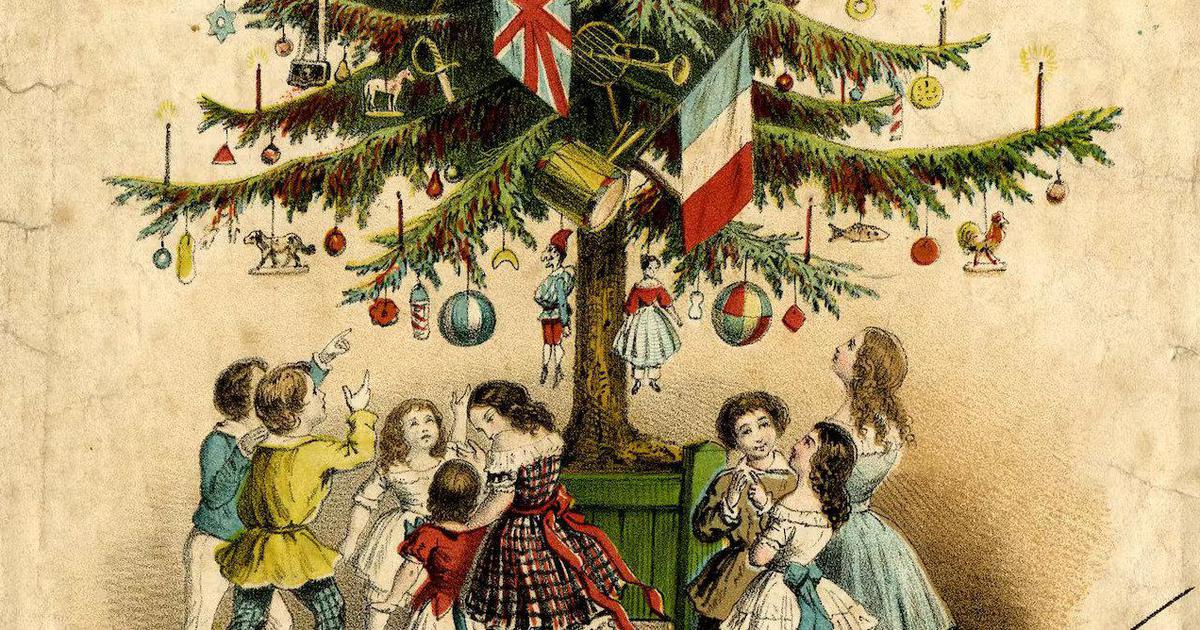
From there, the tree's popularity exploded. In France, it was embraced during the Franco-Prussian War as a symbol of resilience, while in other parts of Europe, variations emerged—such as upside-down trees in Central Europe to save space or represent the Holy Trinity. The Catholic Church was slower to adopt it, with the first Vatican Christmas tree erected only in 1982, reflecting its Protestant origins.
Arrival in America: From Humble Beginnings to National Spectacle
The Christmas tree crossed the Atlantic with German immigrants in the 19th century. The first recorded Christmas tree in America was set up by settlers in Pennsylvania in the 1830s, though tabletop versions appeared earlier. Initially viewed with suspicion by some Puritans who saw it as a pagan holdover, the tradition gained traction after the same royal illustration reached American shores in Godey's Lady's Book in 1850, adapted to appeal to U.S. audiences.
By the late 19th century, Christmas trees had grown from modest tabletop affairs to grand floor-to-ceiling displays, thanks to innovations like glass ornaments from Lauscha, Germany. The introduction of electric lights in 1882 by Edward H. Johnson, an associate of Thomas Edison, revolutionized the practice, replacing dangerous candles with safer illumination. Public displays followed: The first community Christmas tree appeared in New York City in 1912, and the National Christmas Tree on the White House lawn was lit by President Calvin Coolidge in 1923. Today, iconic trees like the one at Rockefeller Center in New York draw millions, symbolizing communal holiday spirit.
Modern Traditions and Symbolism
In the 20th and 21st centuries, the Christmas tree has become a global phenomenon, adapted to diverse cultures. Artificial trees, first patented in the 1930s, now dominate for convenience and sustainability, though real trees remain popular for their scent and tradition. Decorations have evolved too—from handmade crafts to themed ornaments reflecting personal stories, pop culture, or even political statements.
Symbolically, the Christmas tree represents everlasting life through its evergreen needles, the light of hope via its illuminations, and unity in its shared decoration. In an era of commercialization, it also serves as a reminder of simpler joys: gathering with loved ones, reflecting on the year, and looking forward to renewal.
Conclusion: An Enduring Evergreen Legacy
From ancient solstice rituals to glittering modern spectacles, the Christmas tree's history mirrors humanity's quest for light in darkness and continuity amid change. What began as a humble fir in a German home has blossomed into a universal emblem of the holiday season, bridging cultures and generations. As you decorate your own tree this year, consider the centuries of stories it carries—each ornament a thread in a vast, festive narrative. Whether real or artificial, simple or extravagant, the Christmas tree invites us to pause, celebrate, and connect. Happy holidays from essays2.blogspot.com!



0 Comments
NO SPAM NO PROMOTION... Thanks